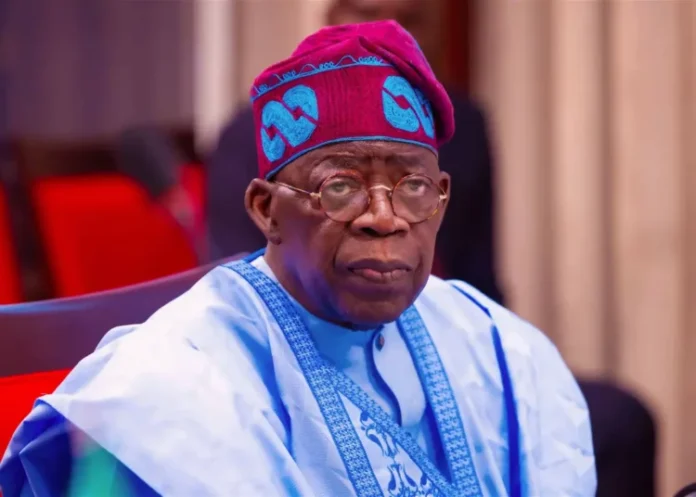
President Bola Tinubu has approved the allocation of a property recovered by the Economic and Financial Crimes Commission (EFCC) to the Nigeria Data Protection Commission (NDPC) as its new headquarters.
The Minister of Communications, Innovation and Digital Economy, Dr Bosun Tijani, made this known on Monday during the commissioning of the facility in Abuja.
According to Tijani, the property was handed to the commission after it complained that its growing responsibilities and international profile were not matched by a befitting permanent office.
He described the conversion of the recovered property into a government facility as an example of returning recovered assets to productive use.
The minister said the commission had faced funding difficulties in its early years, including challenges meeting salary obligations, before the President intervened with direct financial support until the agency could generate sufficient revenue to sustain its operations.
READ ALSO
- Kwankwaso: Tinubu Has Cleared $7bn Loan Backlog, Put Foreign Reserves At $54.13bn
- 2027 Presidency: Tinubu Has No Criminal Records – Omokri
- 2027: Okechukwu Warns Tinubu Against Dumping Wike
“The President directed that a property of this size that was recovered from the work of the Economic and Financial Crimes Commission be allocated to NDPC.
“An asset that is recovered on behalf of the Nigerian people has been returned to productive use for the protection of Nigerian people. A property once associated with the consequence of corruption is today becoming the headquarters of an institution dedicated to protecting Nigerians and strengthening trust in our digital economy”, Tijani said.
He noted that Tinubu signed the Nigeria Data Protection Act shortly after assuming office in 2023, providing the commission with the legal authority to protect the privacy and personal data of Nigerians.
Tijani added that the President subsequently directed ministries, departments and agencies to comply with the country’s data protection laws and frameworks.
He also called for stronger data protection as Nigeria’s digital economy expands, particularly with the increasing adoption of artificial intelligence.
“As our digital economy expands, as more government services become digital, as more Nigerian businesses use data to create value, and particularly as artificial intelligence becomes increasingly embedded in our economy and society, questions around privacy, data governance, trust, and the responsible use of technology will continue to become more important,” he said.

